


How to spot the difference between visual appeal and true wearability
by Praijing Jewelry on May 25, 2026

Looking beautiful and wearing beautifully are not the same thing
Some jewelry wins instantly.
It looks perfect in a photo. The styling is beautiful, the light hits the metal just right, and the piece feels elevated before you even touch it. But then real life begins, and the experience changes.
It twists too much.
It feels heavier than expected.
It catches on fabric.
It needs constant adjusting.
It looks beautiful, but it does not feel easy.
That is the difference between visual appeal and true wearability.
A piece can be visually strong and still not fit into daily life very well. On the other hand, a piece that seems simpler at first glance may become the one you trust most because it works so naturally on the body.
In this post, we’ll look at how to recognize that difference—so you can tell whether a piece is only attractive at first impression, or whether it is actually designed to feel good in real life too.
Visual appeal gets your attention first
Visual appeal is what makes you stop scrolling.
It is often created by:
-
strong styling
-
beautiful lighting
-
good photography
-
bold proportions
-
interesting textures
-
eye-catching color
-
a very clear aesthetic mood
And this matters. Jewelry should be beautiful. It should create emotion and attraction.
But visual appeal is usually about the first reaction.
It answers questions like:
-
Does this look striking?
-
Does it feel polished?
-
Does it match a certain mood or image?
-
Would this look good in a styled outfit or photo?
Those are valid qualities. They are just not the whole story.
Because a piece that wins visually may still lose once it has to live on your body for hours.
True wearability begins where the photo ends
True wearability starts the moment jewelry leaves the image and enters real life.
It is about:
-
how the piece feels on the skin
-
how it moves with the body
-
whether it stays comfortable over time
-
whether it fits into your routine
-
whether it feels easy to repeat
Wearability is less dramatic than visual appeal, but often more important in the long run.
It answers different questions:
-
Will I still enjoy wearing this after three hours?
-
Does it work on a normal day?
-
Can I move naturally in it?
-
Will I want to wear it again next week?
That is why some pieces look exciting once, while others quietly become favorites.
The first clue is whether the design respects the body
A piece with true wearability is designed with the body in mind, not only the eye.
That means it usually considers:
-
balance
-
movement
-
weight
-
contact with skin
-
how the piece sits when the body is active
A piece designed mainly for visual impact may ignore some of these things. It may still look beautiful, but it may:
-
flip too easily
-
slide out of place
-
poke or press
-
feel too heavy after a while
-
create friction with clothes or movement
The most wearable jewelry often feels almost quiet on the body. It stays present without becoming annoying.
That quiet success is one of the clearest signs of strong design.
Good fit reveals a lot
Fit is one of the biggest differences between something that merely looks good and something that truly wears well.
A bracelet with poor fit may:
-
spin constantly
-
slide too close to the hand
-
feel restrictive when too tight
-
look unbalanced while moving
A bracelet with good fit usually:
-
feels secure without pressure
-
moves naturally
-
settles into place more easily
-
looks neat without constant correction
Even a beautiful bracelet can quickly become frustrating if the fit is not right. This is why truly wearable jewelry often includes practical size information or adjustable features.
Good wearability is rarely accidental. It is usually built into the piece.
Materials tell you whether beauty will last past the first impression
Materials are one of the strongest clues when you want to separate visual appeal from real wearability.
A piece designed to truly work in daily life often uses materials that make sense for repeated use, such as:
-
stainless steel
-
practical finishes
-
smooth natural stones
-
durable cords or thoughtful hardware
A piece designed more for visual effect may depend on materials that look great in photos but demand more careful treatment in real life.
This does not make it “bad.” It just changes what kind of relationship the piece is asking for.
If you want jewelry that wears well, material matters because it affects:
-
maintenance
-
comfort
-
durability
-
skin feel
-
how confident you feel wearing it often
True wearability almost always has a material logic behind it.
Hardware and finishing often tell the truth
Sometimes the hidden parts reveal the real quality of a piece more than the front view does.
Look closely at:
-
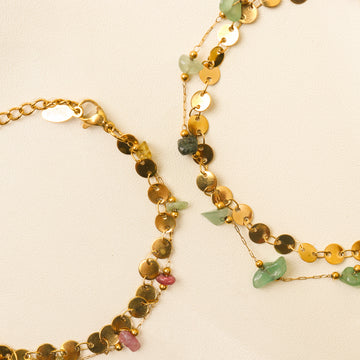
clasps
-
sliders
-
links
-
bead spacing
-
edges
-
finishing around metal details
-
how the back of the piece is built
A piece with strong visual appeal but weaker real-life design may look excellent from the main photographed angle, but less convincing in the practical details.
A piece with true wearability usually feels considered everywhere:
-
front
-
side
-
back
-
closure
-
points of contact with the skin
That kind of thoughtfulness often means the piece was designed not just to be admired, but to be lived in.
Wearability usually feels more balanced than dramatic
One of the easiest ways to recognize true wearability is balance.
Wearable jewelry often has:
-
proportions that feel calm
-
enough detail to be beautiful
-
enough restraint to stay easy
-
a design that supports repetition
Jewelry made mostly for immediate impact may feel more dramatic. Sometimes that is the point. But the more dramatic a piece becomes, the more carefully life may need to adapt around it.
True wearability tends to look less demanding.
It often feels:
-
lighter
-
simpler
-
more refined
-
easier to pair
-
easier to trust
And over time, those qualities often matter more than instant drama.
The real test is whether it works with an ordinary day
A good question to ask is:
Would this still make sense on a completely normal day?
Not at an event.
Not in a styled shoot.
Not with a special outfit planned around it.
Just on a normal day.
Would it still feel right with:
-
a white shirt and jeans
-
a black top and tailored trousers
-
a simple dress
-
linen
-
soft knitwear
-
workwear basics
-
a casual lunch or coffee run
If yes, the piece probably has real-life wearability.
Because truly wearable jewelry does not need a perfect setup. It can enter a regular day and still feel right.
Repetition is the real proof
In the end, the biggest difference between visual appeal and true wearability is repetition.
A visually appealing piece gets admired.
A truly wearable piece gets repeated.
You see the difference over time:
-
one stays exciting in theory
-
the other keeps being chosen in practice
That is why the most wearable pieces often become the most loved. Not because they were the most dramatic at first, but because they kept proving themselves.
Repetition turns jewelry from something attractive into something trusted.
And that is a much deeper kind of beauty.
Questions to ask before buying
If you want to tell whether a piece has true wearability, ask:
-
Can I imagine wearing this for hours?
-
Does the material suit my routine?
-
Does the fit look practical?
-
Does the hardware seem comfortable?
-
Will this need constant adjusting?
-
Does it work with more than one outfit I already own?
-
Does the product page explain function, or only focus on looks?
-
Would I still want it if I never photographed it?
These questions often reveal what styling alone cannot.
Signs you are looking at true wearability
A piece probably has real wearability when:
-
it looks balanced, not just striking
-
the materials are clearly explained
-
the fit seems practical or adjustable
-
the closure looks easy to use
-
the finish appears smooth and considered
-
it seems easy to style repeatedly
-
you can imagine it in ordinary life, not just special moments
That kind of piece often becomes more valuable with time, because it keeps staying relevant.
FAQ
Can a piece be both visually appealing and wearable?
Yes. The best jewelry often combines both. It looks beautiful at first glance but also feels comfortable, practical, and easy to repeat in real life.
Why do simpler pieces often wear better?
Because they usually have more balanced proportions, fewer distracting elements, and greater flexibility with outfits and movement.
Is visual appeal still important?
Absolutely. Jewelry should still feel beautiful. The goal is not to ignore appearance, but to make sure beauty is supported by function too.
How can I tell from a product page?
Look for information about materials, size, fit, closure, and multiple angles—not only highly styled images.
Closing
Visual appeal may start the relationship.
True wearability is what makes it last.
Because the pieces that stay in your life are usually not only the ones that looked beautiful once. They are the ones that continue to feel right—on the body, in the wardrobe, and inside the rhythm of real days.
That is the difference worth learning to see.

